 The Monster Army
 Backrooms (2026) had a genius concept that used familiarity and human’s dangerous mind as its horror. If only the mystery unfolds more subtle and clear, this film could’ve been a more epic and meaningful movie.
Imagine going into rooms that are similar yet there is something eerie about it. Inspired by a photo of a disturbing empty room that’s popular on the internet, Kane Parsons made short films about what he called ‘backrooms’, then with A24 Studio he made it into a movie called Backrooms.
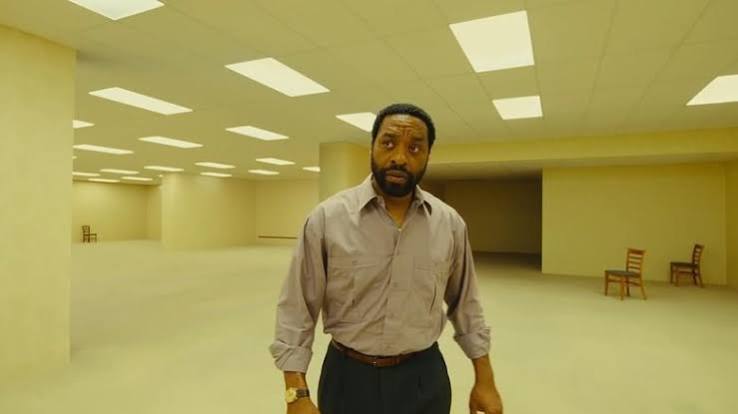
The movie followed a man named Clark (Chiwetel Ejiofor) that failed in his job and his domestic life with his wife. One day he found a mysterious place where there are empty rooms filled with empty walls and weird-placed furnitures. So he went to his therapist, Mary (Renate Reinsve), and told her about that place. Days after that, Clark didn’t show up, so Mary went to the location where Clark described that odd place and found something interesting yet dangerous there.
Backrooms had a truly cool story concept. The settings and the camera-work were amazing as well. It’s mind-blowing and worth watching.
But sadly, the film wasn’t very good at exploring its core potential. Which is how they uncover the truth about that backrooms’ world, and also there are prominently featured characters that probably didn’t need to show up and the film is still good or even better without them.
The most important thing that makes this film bomb is probably the unique settings and the camera-work.
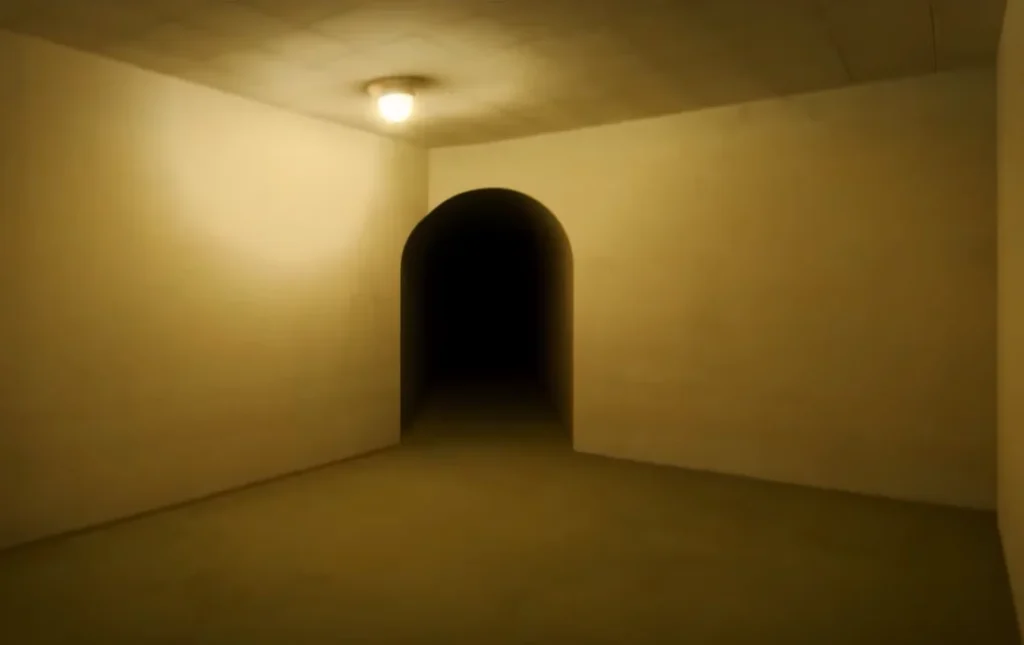
Most of the time, the setting took place in what people called ‘backrooms’, which is a surrealistic liminal space and looks like a maze with no end. There were properties that were haphazardly placed. Some properties even looked like they were drowned onto the walls.
Then, the film showed that backrooms were actually connected with what Mary had said. “We all have our loops, our habits, Behaviours that keep us walking in circles. The path you made was the one that kept you safe as a child.”
She also said, “Your consciousness is a room full of memories that is constantly evolving. But as you walk through life, an untrained mind can put up walls to protect itself.” Backrooms in this film was a very interesting concept. Especially when the shots were pretty good at capturing the essence in the film.
Some scenes were filmed by first-person-POV with a camera. While other scenes were filmed as usual in third-person-POV. Backrooms used these two techniques back and forth pretty well. They used the camera shots mostly at the beginning of the film, which made an amazing effect. The audience were pulled to have their first time discovering about the backrooms as if they really become the characters in the film that went and experienced all that.
While it’s true that the combination between these techniques are good because the audience could feel like they became the character in crucial scenes and become the audience in other scenes, it’s kinda unfortunate that Backrooms only use the camera shots until the middle of the film. ‘Cause from the middle until the end, they only used the usual third-person-POV shots. Whereas there were actually good scenes that could build some more terrifying atmospheres if the audience felt like they are the characters in the film, which is supposed to use first-person-POV. For example, when Mary entered for the first time, or when Clark captured Mary, or when Mary was captured by the research organization.
Besides the shots, there are other things that are quite disturbing and unfortunate in this film. First, the film reveals the world too fast. And second, what’s the point of Async’s existence in this film?
Literally, this film is 1 hour and 50 minutes. But the secrets about backrooms had to be uncovered to the audience by Clark’s dialogues of explanations in 10 minutes. Mary or the audience could have discovered that place’s secret and its entities’ meaning in a more subtle way. Just like how Clark discovered backrooms in the beginning of the film through a long walk full of new findings as each passing room. But no. The film chose to spit it all through Clark’s speaking like a teacher to their student in one short scene.
The second problem is about how Backrooms seemed forced to put Async Research Institute in its film. The whole film felt like it wanted to tell about Async, but they aren’t fully invested in saying it. While they were indeed known as an organization that researched the backrooms in Kane Parsons’s short films, but Backrooms movie itself didn’t really make Async have a meaningful role in this film. They just simply exist.
They had zero effect on the main characters’ life. Except that at the end of the film, suddenly Mary was captured and seemed to can’t go from Async. It’s true that Async was linked in Kane Parsons’s short films about backrooms. But Backrooms is a movie that stands by itself. And Async looked like an unuseful organization that randomly put into this film.
Even though there are some things that are quite unsatisfying from this film, overall Backrooms had a really interesting concept at delivering its parable about memories, fears, and trauma.
The whole world about backrooms is interesting, even though it seems that this film can execute it in a better way. The whole thing about Async is really ambiguous, but maybe they could explain the whole world and about that research organization better if there is a second movie about backrooms.
Our Score (6.5/10)
Title: Backrooms
Director: Kane Parsons
Writer: Will Soodik
Producer: Chris Ferguson
Production House: A24
Casts: Renate Reinsve, Chiwetel Ejiofor
Susan Humeri Siburian
IG: @ssan_o2
Email: ofoggym0rning@gmail.com