 Home of Asmodeus
 Ask any anime fan to name a fictional army and there’s a good chance the Survey Corps comes up before the credits even roll on the question.
Wings of Freedom on the back, green cloaks snapping in the wind, a body count that keeps climbing season after season. It’s a weird thing to get attached to. This isn’t a squad you root for because they win. Most of the time they don’t. You root for them because they keep showing up anyway.
Every other branch in Attack on Titan makes sense on paper. The Garrison guards the walls. The Military Police lounge around the capital protecting people who already have protection. The Survey Corps rides out past the walls into Titan territory with a plan that basically amounts to, “some of us won’t come back, and we don’t know which ones,” Erwin Smith says it outright more than once.
He’s sending soldiers to die so the rest of humanity can learn something useful from their deaths. That’s not a pep talk. That’s a man doing math with human lives and refusing to look away from the total.
That’s the hook. A military unit built entirely around sacrifice as strategy shouldn’t be inspiring, but it is because the show never lets you forget the cost. Named characters die in mid-sentence. Fan favorites get picked off in the same episode you started liking them. The Corps earns its reputation the hard way, one funeral at a time.
The Iconic Gears and Character Development
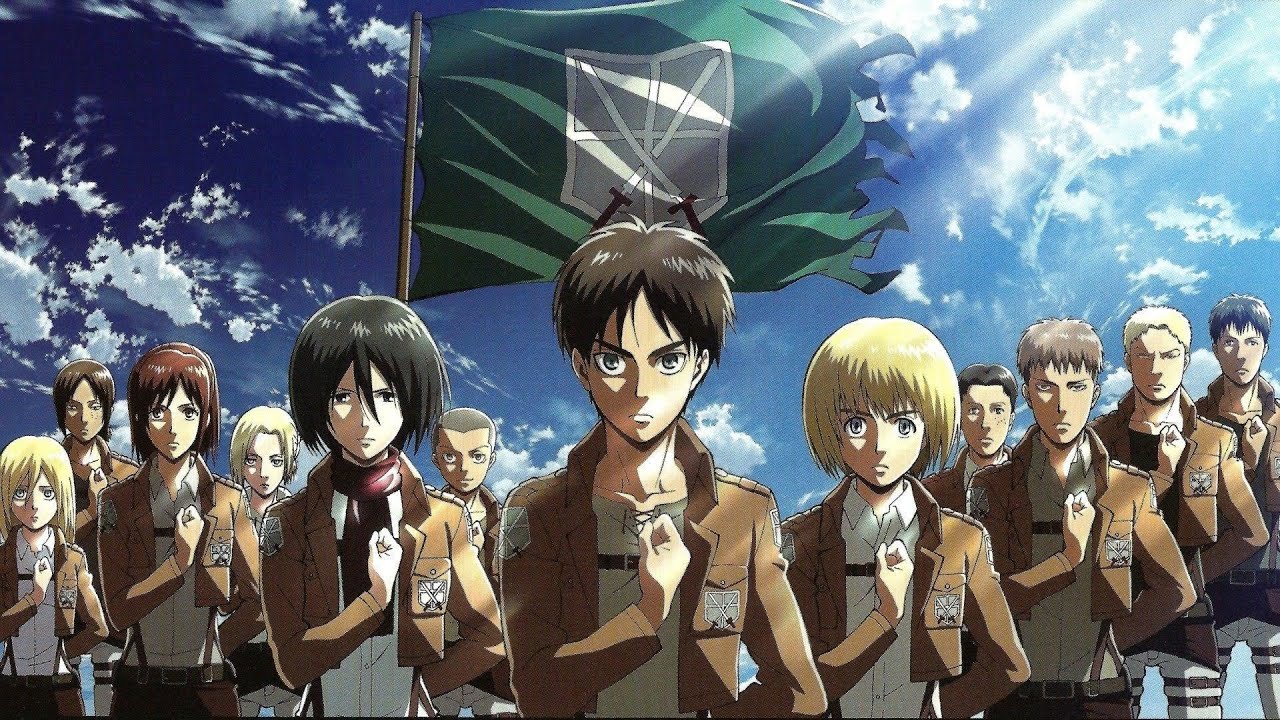
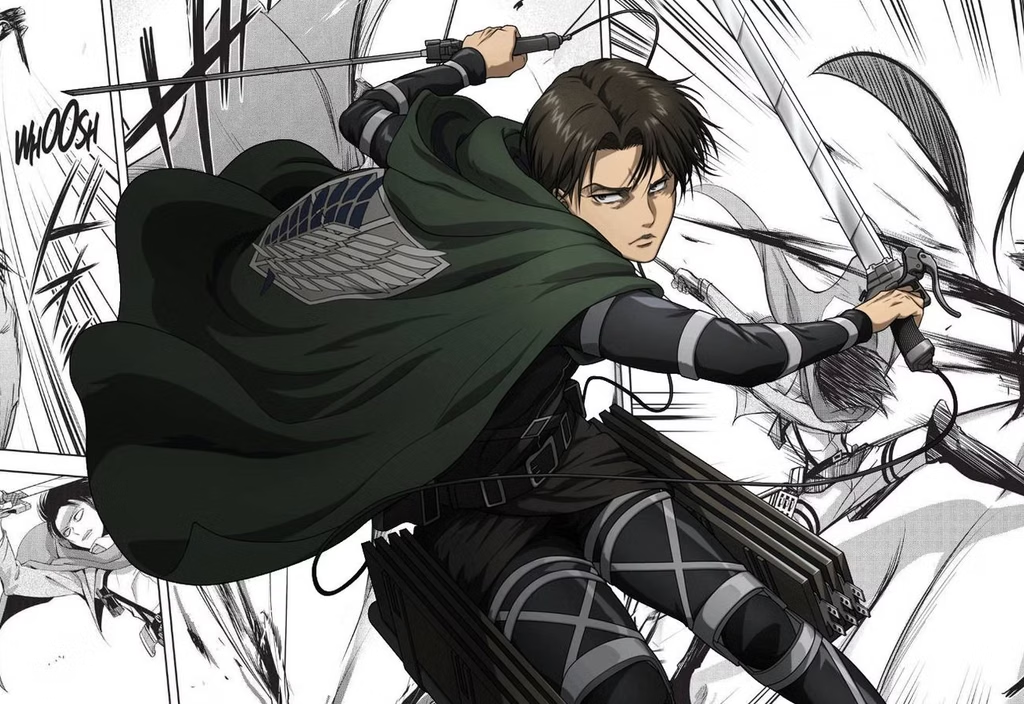
There’s a reason the ODM gear and those green cloaks show up on so much merch, fan art, and yes, an Attack on Titan Scout Regiment jacket or two. The silhouette does a lot of narrative work before a single line of dialogue gets spoken. Soldiers slicing through the air on cables, blades out, wind catching the cloak behind them like a flag mid-battle.
It looks like freedom and it looks like a death sentence at the exact same time, which is basically the whole show in one image.
Compare that to the stiff, buttoned-up uniforms of the Military Police. The Corps’ gear reads as functional, lived-in, built for people who go outside the walls instead of guarding people who never will. Studio WIT and later MAPPA both understood that the uniform needed to carry emotional weight, not just look cool in a promotional poster. It had to feel like something you’d wear into a fight you might not walk away from.
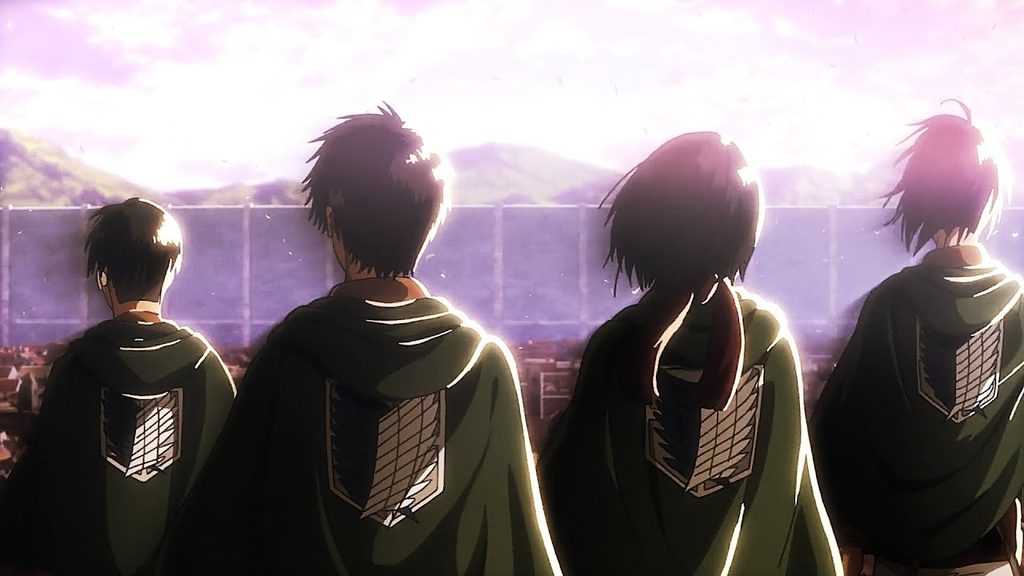
Eren, Mikasa, Armin, Levi, Erwin, Hange, Jean. Take away the Survey Corps and you’ve taken away nearly every character the audience actually cares about. That’s not an accident of plotting. Isayama built the Corps as the pressure cooker where personalities get tested, friendships get strained, and people either grow up fast or don’t grow up at all.
Levi became something close to a cultural shorthand for “quiet, competent, terrifying when provoked,” and almost none of that works if he’s stationed somewhere safe. All of them are wearing that green cloak and slicing through the air.
The unit functions like a family that keeps losing members and somehow keeps recruiting new ones anyway. Training corps graduates walk in wide-eyed and idealistic. A few seasons later, half of them are dead and the survivors have that specific thousand-yard stare the show returns to again.
Watching that transformation happen to characters you’ve grown attached to is most of the reason why people stay up way too late finishing a season in one sitting.
Strategy, Tragedy, and Legacy
Say what you want about Erwin Smith’s methods, but the man understood something about leadership that a lot of fictional commanders miss: conviction only means something if it costs you. His speeches before expeditions aren’t rousing in the sense of Hollywood. They’re grim, honest, and occasionally brutal, and the soldiers charge forward anyway because he’s earned their trust one impossible decision at a time.
The scene where he has to choose between saving Levi or sending his own soldiers to their deaths for a strategic edge is one of the more quietly devastating moments in modern shonen, and it works because the show spent years establishing exactly what that choice cost him.
That’s the difference between a military unit that’s just there for spectacle and one that actually means something. The Survey Corps isn’t cool because of the Titan fights, though those help. It’s cool because every fight is attached to a person you know, a decision that matters, and a cost nobody gets to skip.
By the time the story wraps, the Survey Corps has changed shape so many times it’s almost unrecognizable from where it started. Members die, ranks shift, the mission itself gets redefined more than once. What remains consistent is the idea underneath all of it: some things are worth riding out past the wall for, even when the odds are bad and the ending isn’t guaranteed.
That’s a harder thing to pull off in fiction than most people give it credit for, and it’s exactly why the Corps still gets talked about years after the anime ended. Not every military unit in anime earns a spot in the cultural memory. The Survey Corps did, because it never once pretended the fight was easy.
Name: Olivia Bennett
Email: writer.oliviabennett@gmail.com
About: Olivia Bennett is a freelance writer and pop-culture enthusiast with a passion for anime, movies, and video games. She enjoys exploring memorable characters, stories, and the cultural impact of entertainment.